If you have been thinking about switching to an off-grid solar power system, you are not alone. More and more homeowners across the UK are looking for ways to produce their own electricity and reduce their dependence on the grid.
An off-grid solar system allows you to generate, store, and use solar energy without any connection to the national electricity network. Whether you live in a remote area with limited access to mains power or you simply want full control over your energy supply, this guide covers everything you need to know about how these systems work, what they cost, and whether they suit your home.
What Is an Off-Grid Solar Power System and How Does It Work?
An off-grid solar power system is a solar energy setup that operates completely independent of the utility grid. Unlike on-grid solar or grid-tied solar systems, which remain connected to the national electricity network and can send excess energy back to the grid, an off-grid system relies on its own battery storage to keep your home powered at all times.
So, how do these systems work? Here is a step-by-step breakdown:
- Step 1: Solar panels capture sunlight and convert it into direct current (DC) electricity.
- Step 2: This DC power passes through a solar charge controller, which regulates the voltage and current flowing into the battery bank. The charge controller prevents overcharging and helps extend the life of your batteries.
- Step 3: The energy produced stores it in batteries for later use, especially at night or during cloudy weather.
- Step 4: An inverter converts DC power from the batteries into AC electricity to power your home appliances.
This process gives you a continuous power supply without any reliance on the grid. It also means you can keep your lights on and your appliances running even during power outages in your area.
Key Solar Power System Components
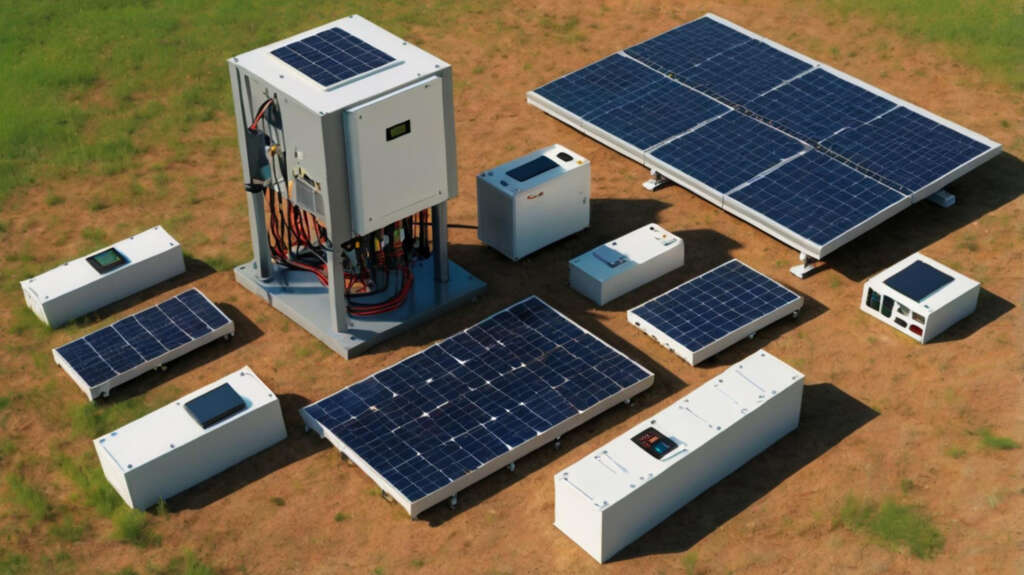
Understanding the solar power system components helps you make a better decision when installing an off-grid solar system. A complete off-grid setup includes solar panels, a charge controller, a battery bank, and an inverter.
Solar Panels
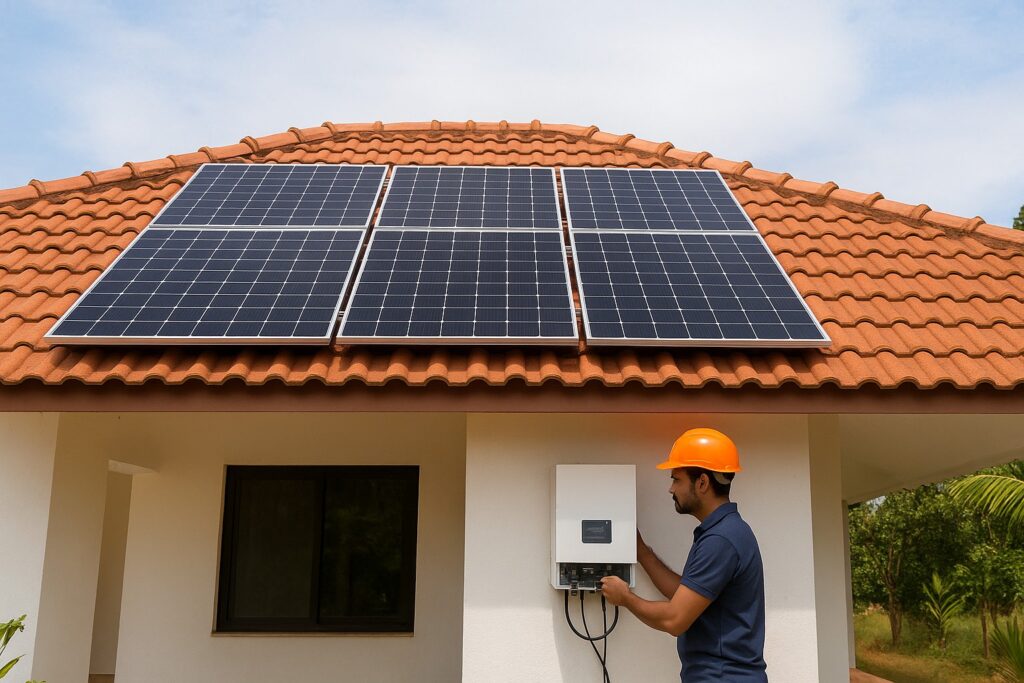
Solar panels are the starting point of every off-grid solar system. They sit on your roof or on the ground and capture sunlight to produce DC electricity. You should consider high-efficiency solar options that generate more power per square metre, which is useful in the UK where sunlight hours can be limited during winter.
There are two main mounting options to choose from:
- Roof-mounted systems are better suited for homes with limited garden space.
- Ground-mounted systems work well for properties with large open areas.
The system size you choose depends on your daily energy consumption and the number of peak sunlight hours your location receives.
Charge Controller
A solar charge controller sits between the solar panels and the battery bank, managing the flow of electricity into your batteries. There are two main types:
- PWM (Pulse Width Modulation): A more affordable option, but less efficient.
- MPPT (Maximum Power Point Tracking): More efficient and generally the better choice for off-grid setups, as it converts more of the solar panel output into usable energy for your battery storage.
Battery Bank
Batteries are essential in any off-grid system because they store the electricity generated during the day so you can use it when the sun is not shining. Without a battery bank, you would only have power during daylight hours.
The most common options for off-grid battery storage are:
- Lead-acid batteries: Lower upfront cost, but shorter lifespan and heavier.
- Lithium batteries: Last longer, charge faster, and take up less space. While the upfront cost is higher, they prove more cost-effective over their full lifespan due to fewer replacements and better performance.
For UK homes, where winter months bring shorter days, having a large enough battery bank is important to avoid running out of power during periods of low solar generation.
Inverter
The inverter converts stored DC power into AC electricity that your household appliances can use. For off-grid setups, you need an inverter that can handle your home’s peak power demand. If you plan to run several appliances at the same time, you need an inverter with sufficient wattage to cover that load.
Off-Grid and Grid-Tied Solar: What Is the Difference?
Understanding the difference between off-grid and grid-tied systems helps you choose the setup that suits your situation best.
| Feature | Off-Grid Solar System | On-Grid / Grid-Tied Solar System |
|---|---|---|
| Grid connection | No connection to the grid | Stays connected to the utility grid |
| Battery storage | Batteries are essential for stored energy | Optional (grid acts as backup) |
| Excess energy | Stored in batteries for later use | Sent back to the grid via SEG |
| Power during outages | Continues working as normal | Loses power unless battery backup is added |
| Upfront cost | Higher (needs larger systems and batteries) | Lower (no need for batteries) |
| Best suited for | Remote areas or places without grid access | Homes with reliable grid connection |
An on-grid system uses solar panels to generate electricity during the day, and any excess energy goes back into the grid through schemes like the Smart Export Guarantee (SEG). If your panels do not produce enough power, you draw electricity from the grid as normal.
An off-grid solar system has no grid connection at all. Off-grid systems require more planning and a larger investment because you need enough solar panels and battery storage to cover all your energy needs, including during winter.
A grid-tied solar system is a good option if you want to lower your bills while staying connected to the grid as a safety net. An off-grid solar system is the better choice for off-grid living, especially in remote areas or places where connecting to the grid is expensive or impractical.
How Much Does an Off-Grid Solar System Cost in the UK?
The cost of an off-grid solar system in the UK varies depending on system size, the type of components, and installation complexity. A small off-grid setup for basic power needs can start from around £5,000 to £8,000. Larger systems that can fully power your home can range from £15,000 to over £40,000.
Here is a rough breakdown of the off-grid solar system cost:
| Component | Estimated Cost (UK, 2026) |
|---|---|
| Solar panel system (4kW) | £5,000 to £7,000 |
| Battery storage (lithium batteries) | £4,000 to £12,000 |
| Solar charge controller (MPPT) | £100 to £600 |
| Off-grid inverter | £500 to £2,500 |
| Installation and labour | Varies by region and installer |
While the initial cost of switching to an off-grid solar system is higher than a grid-tied alternative, you eliminate monthly electricity bills entirely. Many homeowners find that their system pays for itself within 8 to 12 years.
Advantages of Off-Grid Solar Systems
Off-grid solar systems offer several benefits that make them appealing to UK homeowners, particularly those in rural locations:
- Full energy independence: You no longer pay standing charges or unit rates for electricity to power your home. This protects you from future price increases.
- Reliable power in remote areas: For farms, rural cottages, and holiday homes, going off-grid with solar is often the most practical solution where grid connections are unavailable or very costly.
- Protection during power outages: When the national grid goes down, homes with grid-tied systems also lose power. An off-grid system keeps working because it does not rely on the grid for anything.
- Lower carbon footprint: Using solar panels to generate your own electricity means you use solar energy, which is a clean and renewable source of power.
Challenges of Going Off-Grid in the UK
While off-grid solar systems provide many advantages, there are some challenges to consider:
- Higher upfront cost: You need to invest in a larger solar panel system, a significant battery bank, and possibly a backup generator for winter months. This initial cost can be a barrier for some households.
- Regular maintenance: Off-grid systems require regular attention. You need to keep your solar panels clean, monitor your battery health, and service any backup generators.
- Seasonal variation: In the UK, winter brings fewer daylight hours and weaker sunlight. Your solar panels will produce less energy during the coldest part of the year. Many off-grid homeowners install larger systems with extra battery capacity or use a backup generator during extended periods of low sunlight.
- Space requirements: An off-grid solar system isn’t for everyone. If you live in a densely built-up area with limited roof or garden space, installing enough solar panels and battery storage may not be practical. In such cases, a grid-tied solar system with battery backup might be a more sensible option.
Is the Right Off-Grid Solar System for You?
Choosing the right off-grid solar setup depends on your energy needs, your location, and your budget. If you live in a remote area where grid connections are expensive or unavailable, an off-grid solar system in the UK can be a very practical long-term solution.
Before installing solar panels for an off-grid setup, carry out an energy audit of your home. Work out how much electricity you use each day and identify ways to reduce that figure through energy-efficient appliances and better insulation. The lower your daily consumption, the smaller and less expensive your off-grid system needs to be.
A complete off-grid solar system is a solar setup that lets you generate and store your own electricity without any grid connection. It includes solar panels, a charge controller, a battery bank, and an inverter, all working together to give you a reliable and independent power supply.