More people across the UK now want to disconnect from the grid and generate their own electricity. An off-grid solar power system allows you to do exactly that. It gives you full control over your power supply without depending on the national grid. Whether you are comparing an on-grid or off-grid solar system, this guide will explain how off-grid solar power works and whether it suits your home.
What Is an Off-Grid Solar Power System?
An off-grid solar system is a setup that generates and stores electricity without any connection to the grid. Unlike on-grid solar systems, which stay connected to the electricity grid and can send excess energy back to the grid, an off-grid system is completely independent. It produces solar energy through solar panels, stores that energy in batteries for later use, and supplies your home with power at all times.
If you want to use solar energy and have no access to the grid, or if you want full energy independence, an off-grid solar power system is the solution. Off-grid solar systems are not connected to the national grid, so they do not rely on the grid for backup. Instead, they store enough electricity in battery banks to power your home during the night or on cloudy days.
This type of solar system in the UK is becoming more popular, especially in rural areas where a grid connection can be expensive or difficult to arrange.
How Does an Off-Grid Solar System Work?
Understanding how off-grid systems work is not as complicated as it may seem. The process follows a simple chain of steps that moves energy from the sun to your household appliances.
Step 1: Solar Panels Capture Sunlight
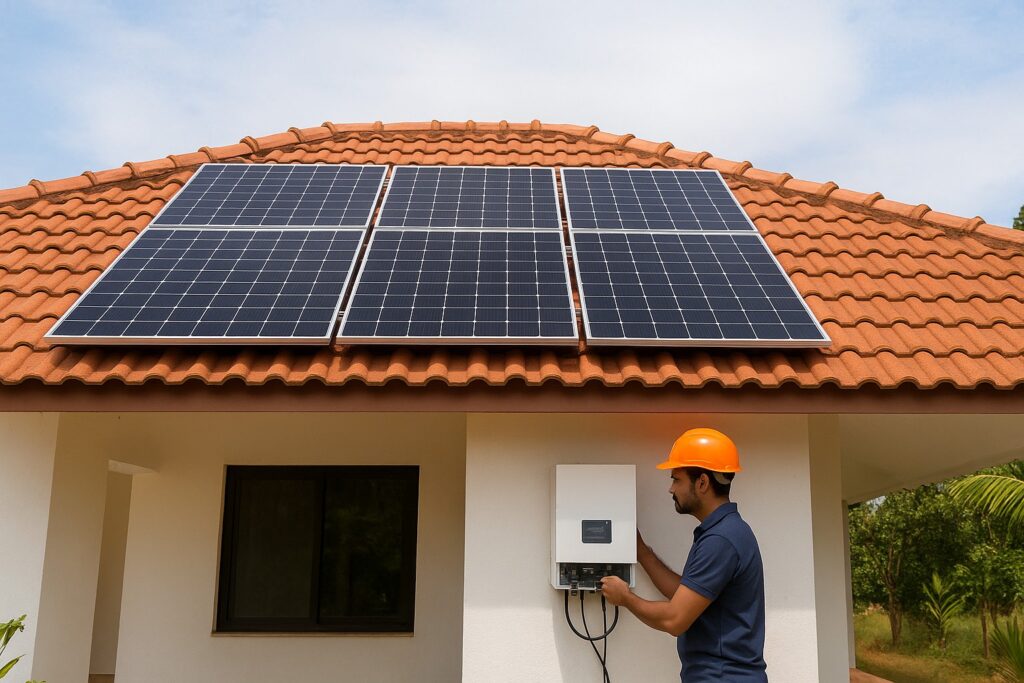
Solar panels capture sunlight and convert it into electricity. The panels generate direct current (DC) power whenever sunlight hits them. Even on overcast days, solar panels generate a useful amount of electricity, although the output is lower than on bright, sunny days. In the UK, south-facing roof-mounted systems are better for catching the most sunlight throughout the year. Ground-mounted systems are generally better suited for larger properties with open land.
Step 2: The Charge Controller Manages Energy Flow
Once the panels generate electricity, that DC power flows to a charge controller. The charge controller regulates the amount of energy going into the battery bank. It prevents overcharging and protects the battery from damage. Without a charge controller, the energy generated by the solar panels could harm the batteries and reduce their lifespan. This component is a small but important part of every off-grid solar power system.
Step 3: Batteries Store the Energy Generated
The battery is the heart of any off-grid system. Since an off-grid solar system isn’t connected to the electricity grid, it must store all the energy generated by the solar panels in batteries for later use. This stored energy keeps your home running when the sun is not shining.
Lithium-ion batteries are the most common choice for off-grid solar systems in the UK today. They last longer, charge faster, and hold more energy than older lead-acid types. A well-sized battery bank allows you to power your home even during extended periods of low solar generation. The system generates and stores enough electricity to cover your energy needs around the clock.
Step 4: The Inverter Converts DC Power to AC Power
Most household appliances run on alternating current (AC) power. Since solar panels and batteries produce DC power, you need an inverter to convert DC power from the batteries into AC power. The inverter makes it possible to plug in and use your normal appliances, from your fridge to your washing machine. Some off-grid setups use hybrid inverters that can also manage a backup generator.
Step 5: Your Home Uses the Electricity
Once the inverter has converted the power, electricity flows to your household appliances just as it would with a standard grid connection. The only difference is that you are generating your own solar power instead of drawing power from the grid.
Solar Power System Components You Need for an Off-Grid Setup
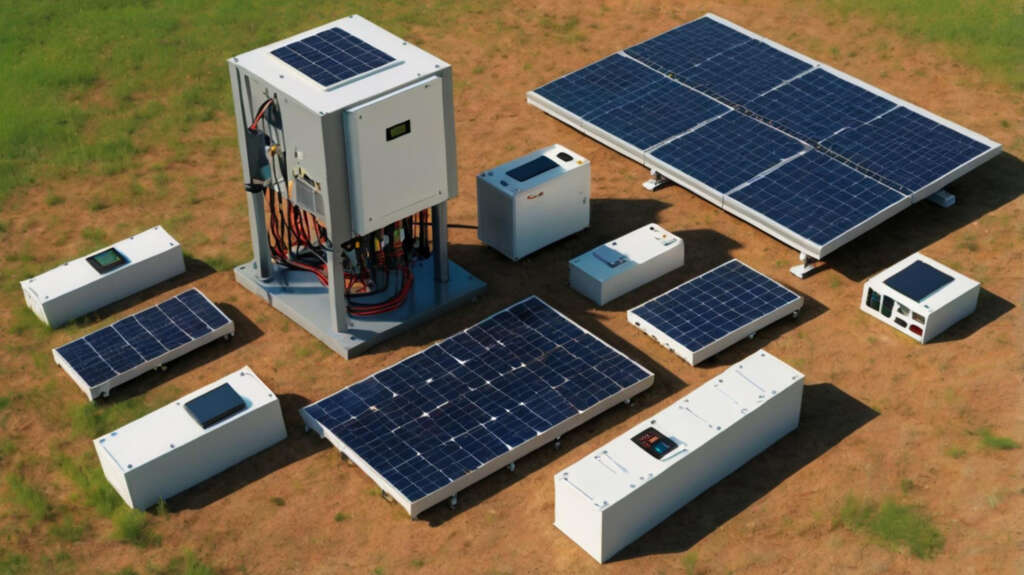
Every off-grid solar system requires a specific set of components to function properly. Here is a summary of the solar power system components that make up a complete off-grid solar setup:
- Solar panels form the foundation of the system. They capture sunlight and convert it into electricity. The number of panels you need depends on your daily energy needs and the system size you require. A solar panel system for a typical UK household will usually include between 10 and 20 panels, depending on usage and available space.
- A charge controller sits between the solar panels and the battery bank. It regulates the charging process and keeps the battery safe. MPPT controllers are more efficient than PWM types and are the preferred choice for most off-grid systems.
- A battery bank stores the energy for use at night or on cloudy days. Off-grid systems require enough battery storage to cover at least two to three days of normal use, especially during winter months when solar generation is lower.
- An inverter converts the stored DC power into usable AC power for your appliances.
- Wiring, mounting hardware, and safety equipment connect all the parts together. A proper solar setup also includes fuses, breakers, and monitoring equipment.
Some off-grid solar systems may also include a backup generator. In the UK, winter months bring shorter days and less sunlight, so a generator can provide reliable power during extended periods of low solar generation. This means you avoid running out of power during the darkest months of the year.
On-Grid and Off-Grid Solar Systems: What Is the Difference?
The main difference between on-grid and off-grid solar systems is the connection to the grid. An on-grid system stays connected to the national grid. When your panels generate more electricity than you use, the excess energy goes back to the grid, and you may receive payment through the Smart Export Guarantee (SEG). When your panels do not produce enough, you can draw power from the grid to cover the shortfall.
An off-grid system has no connection to the grid at all. You cannot send energy back to the grid or draw power from the grid when your panels are not producing. Everything your home needs must come from the solar panels and the battery bank.
On-grid solar systems are generally cheaper to install because they do not need large battery banks. A grid-tied system uses the grid as a backup, so it requires less storage. Off-grid solar systems need a much larger battery bank and sometimes a backup generator, which increases the overall cost.
So which systems are better? On-grid systems are ideal for homes in urban areas where reliable grid power is available. Off-grid systems are ideal for remote properties, farms, or anyone who wants to disconnect from the grid entirely.
Off-Grid Solar System Cost in the UK
The cost of an off-grid solar system depends on several factors, including your energy needs, the system size, the type of battery you choose, and the complexity of the installation. For a typical UK household, the off-grid solar system cost usually falls between £10,000 and £20,000.
A smaller system that powers only lights, a fridge, and a few basic appliances might cost between £3,000 and £5,000. A larger system designed to fully power your home can cost £20,000 or more. The battery bank is often the most expensive part.
The cost of an off-grid solar system also includes ongoing maintenance. You will need to monitor battery health, clean the solar panels regularly, and service any backup generator. Batteries typically last between 10 and 15 years before they need replacing.
Despite the higher upfront cost, many homeowners find that the long-term savings make the investment worthwhile. You eliminate monthly electricity bills, avoid rising energy prices, and gain full energy independence.
Advantages of Off-Grid Solar Systems
Off-grid solar systems allow homeowners to take full control of their energy supply. Here are the main advantages of off-grid solar:
You achieve complete energy independence. Your home does not rely on the grid for anything. You are free from power cuts, rising energy prices, and standing charges from energy suppliers.
Off-grid solar systems provide power even during grid outages. Since your system is completely separate from the national grid, problems with the wider electricity network do not affect you.
You reduce your carbon footprint by using solar panels to generate electricity from a renewable energy source. Solar energy produces no emissions during operation, making it one of the cleanest ways to power your home.
Off-grid solar can also add value to rural properties where grid power is unavailable. For properties that have no existing grid connection, install an off-grid solar system and you avoid the high cost of connecting to the grid entirely.
Is an Off-Grid Solar System Right for You?
An off-grid solar system depends on your location, your energy needs, and your budget. If you live in a remote area with limited or no access to the grid, going off-grid with solar panels makes a lot of sense. If you already have a reliable grid connection in an urban area, an on-grid system may suit you better.
Before you install solar panels and commit to an off-grid setup, calculate your daily energy use carefully. List every appliance you want to use solar energy for, work out its wattage, and estimate how many hours a day you run it. This will help you determine the right system size.
A solar system without proper sizing will leave you short of power, while a system that is too large will cost more than necessary. Getting the balance right is the key to a successful off-grid solar power system. If you are serious about generating your own solar electricity, speak to a qualified solar installer who can assess your property and recommend the right setup.
Final Thoughts
An off-grid solar system gives you full control over your electricity supply by using solar panels to generate, store, and use your own renewable energy. The system relies on solar PV panels, a charge controller, batteries, and an inverter to provide reliable power to your home without any connection to the national grid.
While the upfront cost is higher than an on-grid setup, the long-term benefits of energy independence, protection from rising energy prices, and freedom from grid outages make it an attractive option for many UK homeowners. Whether you want to power a remote property or simply want to disconnect from the grid, off-grid solar power offers a practical and sustainable path forward.